

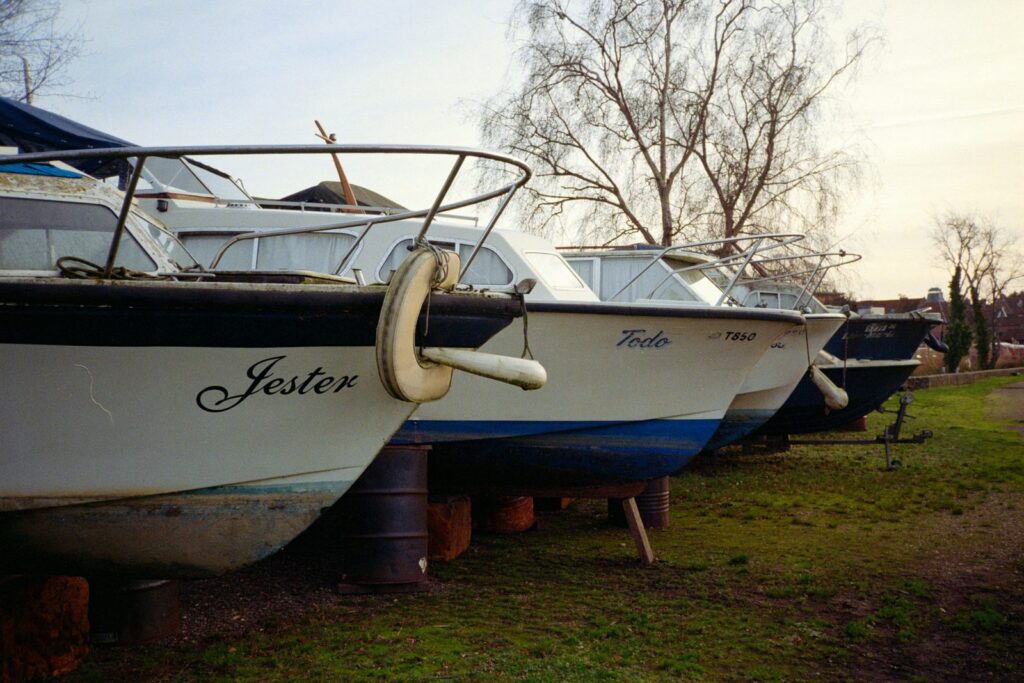
To winterize your boat means draining or replacing every drop of water in the engine, plumbing, and cooling systems with antifreeze before the first hard freeze hits. Skip it, and a single cold night can crack an engine block that costs thousands to replace.
Georgia winters are mild, but “mild” is exactly why so many Jackson Lake boat owners get caught off guard. Below is the full checklist to winterize your boat, why it matters even here in central Georgia, and where to store it once it is ready for the off season.
What Does It Mean to Winterize a Boat?
Winterizing a boat means protecting every system that holds water so freezing temperatures cannot damage it. Fresh water expands by about 9% when it turns to ice, and that expansion pushes outward with a force of tens of thousands of pounds per square inch. That is enough force to crack an engine block, split a hose, or ruin a cooling system overnight.
According to a ten year analysis of freeze claims by GEICO and BoatUS, more than three quarters of all boat freeze damage involved a cracked engine block or exhaust manifold. In almost every case, the cause was water left inside the engine or cooling system.
Most boats take an hour to a day to winterize properly, depending on the engine type and how many systems are on board. The work itself is not complicated. It just has to be done before the temperature drops, not after.
Do You Really Need to Winterize a Boat in Georgia?
Yes, and this is the mistake that catches the most Southern boat owners. BoatUS’s own claims data shows a clear pattern: boaters in cold Northern states almost always winterize, so their claims tend to involve a mistake in HOW they did it.
Boaters in the temperate South are far more likely to skip winterizing altogether, or to rely on a space heater in the engine compartment instead. Both habits lead to the same spring surprise: a cracked block and a boating season lost to repairs.
A 4,750 acre lake needs a long, hard freeze to ice over, which central Georgia’s mild climate rarely produces. But the lake freezing and your engine freezing are two different things.
A single overnight freeze below 32 degrees Fahrenheit is enough to crack an unprotected engine block sitting in dry storage, whether or not the lake surface itself ever ices up. That is the risk winterizing removes.
When Should You Winterize Your Boat at Jackson Lake?
Plan to winterize your boat before the first hard freeze of the season, not after the forecast already says freezing rain. According to the National Weather Service, the average first freeze date (32 degrees Fahrenheit or colder) falls in mid-October across northeast Georgia and mid-November across central Georgia, where Jackson Lake sits.
A safe rule of thumb for Jackson Lake boaters is to winterize your boat by the first week of November, since an unusually early cold snap is always possible and repair yards get busy fast once the weather turns. Waiting until a freeze warning is already in the forecast is the single biggest reason boat owners in the temperate South end up with freeze damage.
One Jackson Lake quirk works in your favor here. Since Georgia Power installed Obermeyer crest gates on the Lloyd Shoals Dam in 2012, the lake no longer needs the large annual winter drawdown many other Georgia lakes still get.
Jackson Lake now holds a fairly steady level of about 527 to 530 feet year round. That means dry storage stays easy to access all winter, so there is no reason to put off getting your boat out of the water and prepped for the cold.
What Are the Essential Steps to Winterize Your Boat?
The exact steps vary a little by engine type, but the same eight cover the systems responsible for nearly every freeze claim on record. Follow these eight steps to winterize your boat, in order.
- Fill the fuel tank and add stabilizer. A full tank leaves less room for moist air, which matters if your gas contains ethanol (E10). Ethanol absorbs moisture over the winter and can separate from the gasoline, a process called phase separation that leaves a corrosive mixture at the bottom of the tank. Filling to around 95% full and adding a fuel stabilizer prevents this.
- Change the oil and oil filter. Used oil holds acids and moisture that pit bearings and other engine parts if left sitting all winter. Run the engine a few minutes first to warm the oil, then change it and the filter before storage.
- Drain the water or run antifreeze through the engine. This is the step behind most freeze claims. Raw water cooled engines need either a full drain or, better, a full circulation of nontoxic propylene glycol antifreeze through the block, manifold, and water strainer. Ethylene glycol coolant (the kind used in the freshwater side of the cooling system) is toxic and should never be used anywhere it could end up in drinking water or overboard.
- Fog the cylinders on gasoline engines. With the engine running, fogging oil is sprayed into the carburetor or air intake until the engine stalls out. This coats internal parts with a thin protective film that resists rust and corrosion over the winter.
- Care for the battery. Either bring the battery home and put it on a marine smart charger with a float setting, or top off the electrolyte and leave it on a charger rated for 25 to 40% of the battery’s amp hour capacity. Do not leave a battery on a basic automotive trickle charger for months at a time.
- Drain the freshwater system and add antifreeze. If your boat has a freshwater tank, sink, or head, drain the tank, then run nontoxic propylene glycol antifreeze through every line and outlet until it flows from the far end. A drain alone is not enough; water pools in low spots and freezes there.
- Clean the boat and add a cover. A well supported cover with a frame and vents keeps rain, leaves, and snow out while still letting air circulate to prevent mildew. If you are considering shrink wrap, hire a professional. Shrink wrapping is done with a propane heat gun, and boatyard fires from DIY shrink wrap jobs are a well documented risk.
- Choose the right storage spot. Wherever the boat sits for the winter, it needs to be properly supported on jackstands, a cradle, or a trailer, level, and away from overhanging branches. Dry storage on land is generally safer over the winter than staying in the water, since boats ashore are not exposed to ice damaging thru-hulls or sinking if a hose fails.

Do Inboard, Outboard, and Sterndrive Engines Winterize the Same Way?
The goal is identical for every engine type when you winterize your boat: no standing water anywhere it can freeze. The method differs slightly depending on what is under the hood.
| Engine Type | Main Winterizing Task | Extra Step |
|---|---|---|
| Inboard (raw water cooled) | Circulate nontoxic antifreeze through the block, manifold, and strainer | Fog cylinders on gasoline engines; check freshwater-side coolant mix |
| Outboard | Flush with fresh water, then fog while running on stabilized fuel | Drain and refill lower unit gear oil; store in the down position |
| Sterndrive (I/O) | Flush and antifreeze the drive using flush muffs | Drain and refill outdrive oil; inspect anodes |
| Personal watercraft (jet drive) | Run briefly out of water on stabilized fuel to clear water from the pump | Change oil, oil filter, and fuel filter as with other engines |
Whatever type of engine you have, check the owner’s manual before you start. Some newer outboards include a self-winterizing mode built into the engine’s electronics, and skipping the manufacturer’s specific steps to winterize your boat can void a warranty.
Can You Just Use a Space Heater Instead of Winterizing?
No, a space heater is never a substitute for taking the time to winterize your boat properly. This is one of the most common and most expensive mistakes BoatUS sees every year. A space heater only works as long as it has power, and winter storms are exactly when the power tends to go out.
BoatUS’s claim files include boats that froze and cracked a block after an ice storm knocked out the power to a heater left running in the engine compartment. Other cases involve a heater’s extension cord or wiring starting a fire that destroyed the boat.
Heaters can also raise humidity and mildew inside a closed-up boat instead of preventing damage. There is no safe substitute for actually draining the water and adding antifreeze.
Where Should You Store Your Boat Near Jackson Lake This Winter?
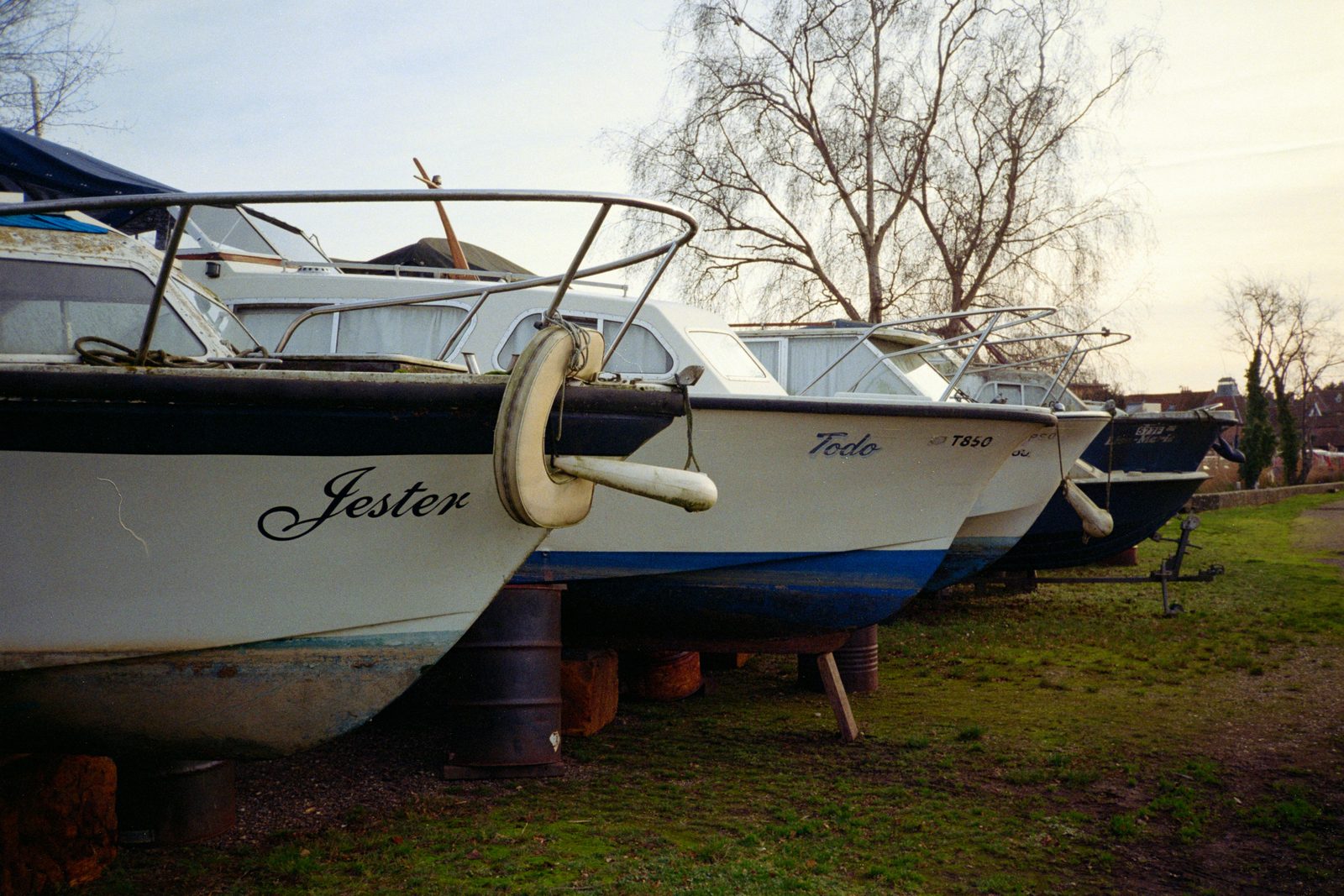
Once you winterize your boat, where you store it for the season matters almost as much as how you prepared it. Bear Creek Marina offers both covered and uncovered dry boat storage on Jackson Lake in Mansfield, Georgia, for boats of all sizes, short term or long term.
Storing dry, on land, means your winterized engine and systems are not sitting in the water all winter, and your boat is only minutes from the marina’s public boat launch when spring arrives. For a closer look at choosing between covered and uncovered storage, see our full guide to Jackson Lake boat storage options.
If you are trailering your boat home instead, our guide to boat launch and storage at Jackson Lake covers what to check before you tow, and our Georgia boating laws guide is a good refresher on registration and safety equipment rules before you head back out next season.
Bear Creek Marina is also home to waterfront RV and camper hookups if you are visiting the lake this fall to prep your boat for storage and want to make a weekend of it before the weather turns. And if a named storm is in the forecast, our hurricane season boat storage guide covers what to check before the wind picks up.
Frequently Asked Questions
How long does it take to winterize a boat?
Most boats take an hour to a day to winterize, depending on the engine type and how many systems, such as a freshwater tank or air conditioning, need antifreeze. Larger boats with more onboard systems take longer to winterize your boat than a simple outboard runabout does.
How much does it cost to winterize a boat?
Cost depends on whether you winterize your boat yourself or hire a marina or service shop, plus how many systems your boat has. Doing it yourself mainly costs the price of nontoxic antifreeze, oil and a filter, and fuel stabilizer. Hiring a professional adds labor on top of those same supplies, and larger boats with more systems, such as air conditioning or a generator, cost more to winterize than a simple outboard.
Can I winterize my own boat, or do I need a professional?
You can winterize your boat yourself for the engine, fuel system, and battery steps with basic tools and a few gallons of nontoxic antifreeze. Shrink wrapping is the one step worth leaving to a professional, since it involves a heat gun and a real fire risk if you have not done it before.
What happens if you do not winterize your boat?
If water is left in the engine, cooling system, or plumbing and it freezes, the ice can crack the engine block, exhaust manifold, hoses, or fittings. Many owners do not discover the damage until spring, when a cracked block shows up as discolored oil on the dipstick or water spewing from the engine on startup. Repairs often mean a full engine replacement and a chunk of the next boating season lost to the repair yard.
Does Jackson Lake freeze in the winter?
Georgia’s Piedmont climate is far milder than the Northern states most winterizing guides are written for, and a lake as large as Jackson Lake needs a sustained hard freeze to ice over, which is uncommon here. That said, the lake’s surface has nothing to do with whether your engine can survive a single hard freeze. Even one cold night below 32 degrees Fahrenheit is enough to crack an unprotected block, which is exactly why so many Southern freeze claims involve boats that were never winterized at all.
Should I remove my boat’s battery for the winter?
If your boat will sit for the winter, it is a good idea to bring the battery home and keep it on a marine smart charger with a float setting, checking it about once a month. Battery care is one of the easiest steps to winterize your boat and one of the most commonly skipped. If you leave the battery aboard, keep the connections clean and tight and use a charger built for long term storage rather than a basic automotive trickle charger.
Where can I store my boat near Jackson Lake after I winterize it?
Bear Creek Marina offers covered and uncovered dry boat storage on Jackson Lake in Mansfield, Georgia, steps from the marina’s public boat launch, for boats of all sizes on a short term or long term basis.
Ready to winterize your boat and get it into storage before the first freeze? Call Bear Creek Marina at (770) 787-9621 or contact us to reserve a covered or uncovered dry storage spot at 60 Bear Creek Marina Road, Mansfield, Georgia, before the fall rush fills up.
