

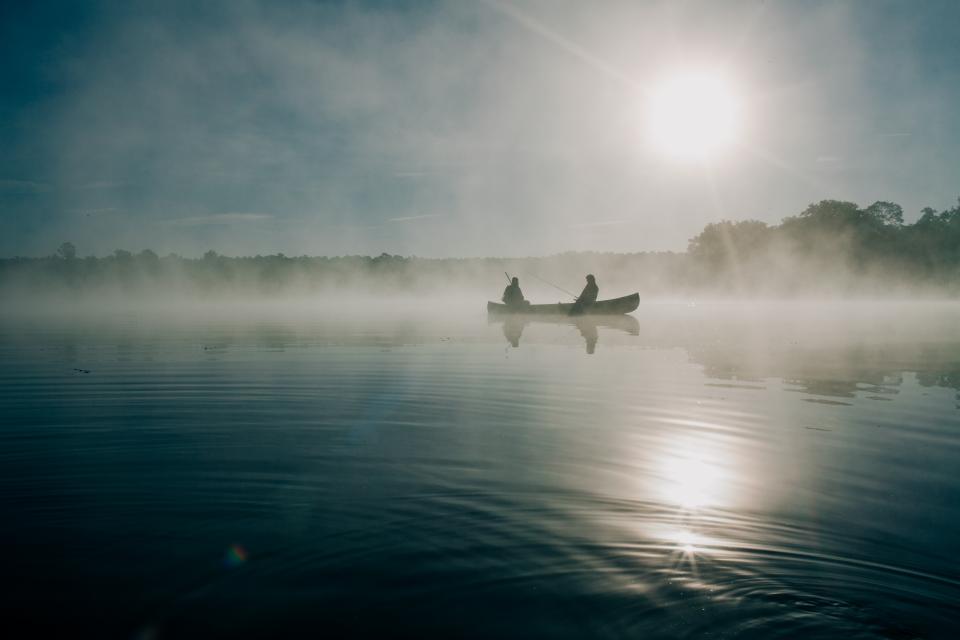
Winter fishing on Jackson Lake, Georgia slows down, but it doesn’t shut off. Georgia DNR’s weekly fishing reports for December 19, 2025 and January 2, 2026 each list Lake Jackson with clear water in the 50s, and each one carries bass and catfish tips for the lake.
If you’re launching your own boat from Bear Creek Marina’s ramp this winter, here is where the fish were, what they were biting, and what to know before you back the trailer down.
What Winter Fishing on Jackson Lake Actually Looks Like
Start with what Georgia DNR says about cold water. Fish are cold-blooded, so cooler water makes them lethargic and slows their metabolism. The Georgia Department of Natural Resources’ Wildlife Resources Division explains that this means fish don’t feed as often or on as large of prey, which is why it tells winter anglers to fish a smaller bait with a slower action.
What makes Jackson Lake worth a post of its own is the detail. The December 19 report called the bass bite slow, with changing weather and water levels in the mix. The January 2 report called bass fishing fair and added that there were hardly any anglers on the lake with hunting season underway. That fits the general rule: fewer bites and slower presentations.
Both reports are weekly entries from Georgia DNR’s Wildlife Resources Division. The bass notes in each came courtesy of Ken Sturdivant’s Southern Fishing Report, and the catfish notes came from the division’s own fisheries staff. DNR’s 2018 winter fishing post calls its weekly fishing blog a great site for timely tips and the latest fishing hotspots, even in cold weather, so it is worth a look before each trip.
Weather and water levels swing. Between the two reports, the lake level Georgia DNR listed went from full to down 2.0 feet. That December entry said the cold front earlier that week had its effect on the bass, and that fishing might improve as the weather warmed and the water settled.
To see how the water temperature moves through the year, our Jackson Lake water temperature guide goes season by season.
Where Bass Hold in Cold Water
The newer report split Lake Jackson’s bass into two groups. Some fish were shallow and could be caught on a 3/8 ounce jig worked around shallow rocks and docks, in all black or all brown.
More numbers were deeper, in 15 to 20 feet of water, and were taking Carolina rigged watermelon colored worms, football jigs and jerk baits. The report’s advice for the deep bite was to look for rock with any brush on it, and it suggested using a vertical jig, in a 1/2 to 3/4 ounce spoon, once you find fish on your sonar.
The earlier report pointed somewhere else: channel ledges. It named two crank baits, the Shad Rap and the DT6, to throw on or near the channel ledges, and it suggested a Carolina rigged lizard as a plastics option.
It also gave a warming trend tip that is easy to use from a boat: sunshine on red clay banks and rocks is a good place to fish, because the bass move up to warmer water to feed and the rock and red clay warm the water around them first.
The state’s general winter guidance lines up with both reports. It says to cast over deep spots where the bottom changes, such as a ledge or a hump, and that a change in structure paired with cover like a dock or weed bed can make good habitat for holding fish.
It also points out that after the lake turns over, the deeper water ends up warmer than the surface, so fish hang out in the deeper parts. It adds that shallow, muddy water can also be a reservoir hotspot as the water warms and attracts baitfish. A fish finder and a hydrographic map make that structure easier to locate. Our guide to the best fishing spots on Jackson Lake and our bass fishing guide are good companions for reading the lake with winter in mind.
| DNR report | Lake Jackson conditions listed | Bass notes |
|---|---|---|
| December 19, 2025 | Full, clear, water in the 50s | Slow bite after a cold front. Crank baits on or near channel ledges. Sunny rock and red clay banks during a warming trend. |
| January 2, 2026 | Down 2.0 feet, clear, water in the 50s | Fair bite. Shallow rocks and docks on jigs, deeper fish in 15 to 20 feet on Carolina rigs, football jigs and jerk baits. |
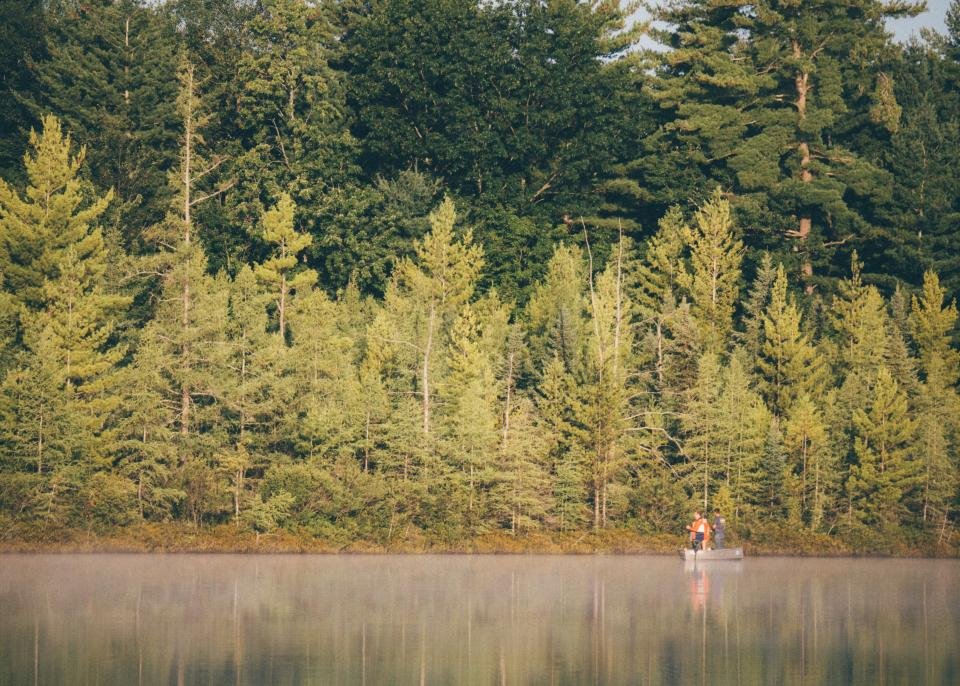
Catfish Settle Into Deeper Water
If the bass are being stubborn, catfish are a reasonable second plan. The Wildlife Resources Division’s fisheries staff wrote in both reports that in December most catfish on Lake Jackson, especially the larger blues and flatheads, settle into deeper holes and bends near the main lake and dam.
They expect the fish to sit tight to the bottom, with the best action around deep channel transitions such as the South River arm near the Highway 36 bridge, or other creek to river breaks.
The same entry has practical advice. Fish with heavy gear, because Jackson has some large catfish roaming around. Flatheads prefer live bait, with bream named as the example, while blues are less selective and can be caught on cut bait.
Anchor or drift slowly over deep structure and channel edges, and note that bite windows often improve in low light or stable midday weather. Our catfish fishing guide for Jackson Lake goes deeper on rigs and bait.
What About Crappie?
Neither of Georgia DNR’s Jackson Lake entries in those two reports covered crappie, so there is no lake specific winter crappie report to repeat here. For a starting point, the later report carried a note from a guide on Lake Hartwell, a different reservoir, who said December crappie are all over the place, from brush to bridges to docks to open water.
The guide called 15 to 20 feet a generally good depth range and said casting jigs at brush is often the guide’s most productive pattern, though fish can be caught plenty of other ways. Treat that as a place to begin rather than a Jackson Lake fact, and use our crappie fishing guide for Jackson Lake for what we know about the lake itself.
What to Fish With in Winter
Think smaller baits and a slower action, not just a slower retrieve. Georgia DNR recommends lures that resemble crayfish or small baitfish such as minnows and shad, and says soft plastics like small plastic worms, skirted jigs and tube baits can work if they are fished slowly and patiently.
Frogs, grasshoppers and leeches are not seen much in winter, so lures that imitate them look unnatural to the fish. Live bait works well because it moves naturally with the water conditions, and minnows and shad move slowly and provide their own action.
The hardest part, according to the same DNR post, is slowing artificial bait down to a crawl. Its rule of thumb is that if you think you are fishing too slowly, you are close to the speed that gets a response. Putting the two Jackson Lake reports and DNR’s winter tips together, a simple winter plan looks like this:
- Start with a smaller bait and slow your action down to a crawl.
- Try a jig around shallow rocks and docks, then move out to 15 to 20 feet if the shallow water is quiet.
- On a warming trend, fish sun-warmed rock and red clay banks.
- If nothing is biting, work channel ledges with a crank bait or drop a vertical spoon over fish you can see on your electronics.
Launching Your Boat at Bear Creek Marina This Winter
Bear Creek Marina’s boat ramp runs 6 AM to 9 PM, with a $7 launch fee plus $5 for each extra vehicle, and you can pay the fee online. Call (770) 787-9621 first if you are planning an early or late winter launch, so you know what to expect before you tow the boat out.
Bear Creek does not offer shore or dock fishing on the marina property, so plan on fishing from a boat or from a rented kayak or canoe. There is also no fuel dock and no bait and tackle shop at the marina, so pack your bait and fuel up in Covington or Monticello before you arrive.
If you would rather not trailer a boat in and out all winter, Bear Creek also offers covered and uncovered dry boat storage on site, at $125 a month covered and $75 a month uncovered. Boats are kept out of the water, so yours is already at the lake when a mild stretch of weather opens up. Storage customers pay the same $7 launch fee as everyone else.
Is It Safe to Fish Jackson Lake in Winter?
Cold water changes the stakes of a simple mistake, and the National Weather Service (NWS) is blunt about it. It says wearing a life jacket significantly increases chances of survival.
It also says cold shock, the gasping or rapid breathing that sudden immersion can trigger, can be set off by water as warm as 77 degrees Fahrenheit, and that cold shock can be just as severe and dangerous in water of 50 to 60 degrees as it is in 35 degree water. The 50s that Georgia DNR listed for Lake Jackson in both winter reports fall inside that range.
NWS also describes physical incapacitation, a loss of muscular control in the arms, legs, hands and feet, which can be felt within seconds of entering cold water.
It puts the start of hypothermia at the point where core body temperature drops to 95 degrees Fahrenheit. The practical takeaway is to wear the life jacket the whole time you are on the water, not just when it feels rough.
NWS’s preparedness list is short and worth following. Dress for the water temperature, not the air temperature. Check the weather and the water temperature before you go.
File a float plan with someone you trust that covers the trip, the boat, the passengers, the towing or trailer vehicle and emergency contacts. And if the water is too cold, NWS says to consider staying off it until it warms up.
If you do go in, NWS passes along the Coast Guard’s guidance: stay calm, minimize your time in the water and get out as soon as you can do so safely. If you cannot get to safety, assume the Heat Escape Lessening Position, with your knees drawn to your chin, your legs together, your arms pressed to your sides and your head out of the water.
The gasping phase of cold shock lasts the first two to three minutes or more, and a life jacket helps you stay afloat through it. Once you are out, get into a warm, dry, protected place as quickly as possible, because NWS notes that core body temperature can keep dropping even after you leave the water.
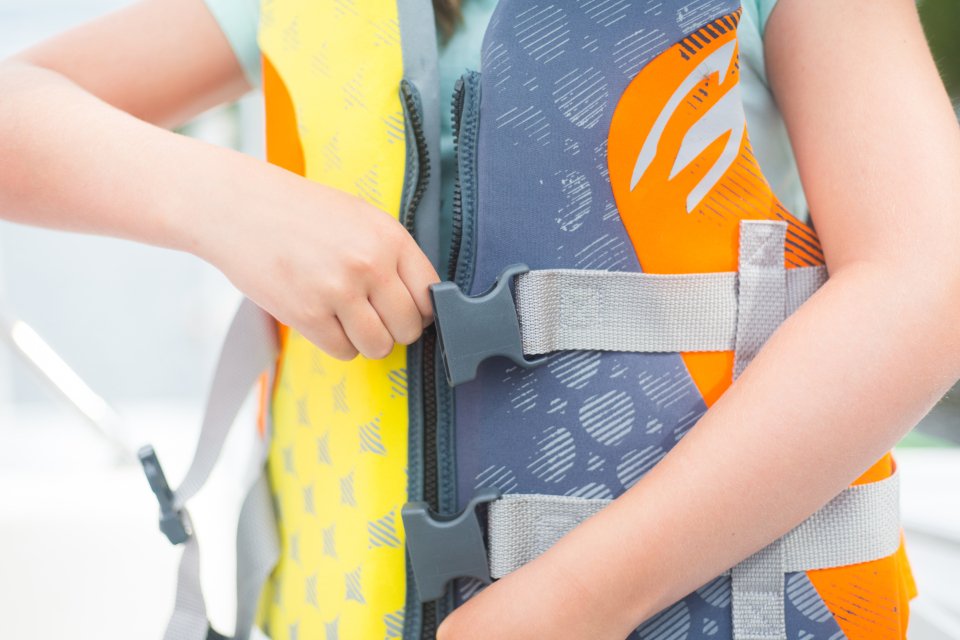
A powerboat is not the only way onto the lake. Bear Creek rents single kayaks at $25 for a half day and $40 for a full day, plus one canoe at $45 for a full day, and every rental includes a paddle and a life jacket. You can book a kayak or canoe online. Check the forecast first, and keep the life jacket on.
Do You Need a Fishing License in Winter?
Yes, if you are 16 or older. As published on eRegulations, Georgia’s rules say anglers age 16 and older must have a current Georgia fishing license in their possession while fishing in fresh or salt water in the state.
For who is exempt, how to buy a license and what else to carry, see our Jackson Lake fishing license guide and eRegulations’ summary of Georgia’s license requirements.
A Winter Launch Checklist
Put the pieces above together before you tow out:
- Check the weather and the water temperature before you go, and carry a current Georgia fishing license if you are 16 or older.
- Fuel the truck and the boat and pack your bait before you leave home.
- Remember the ramp runs 6 AM to 9 PM and costs $7 plus $5 for each extra vehicle, and call the marina if you plan an early or late launch.
- Wear your life jacket, dress for the water temperature and leave a float plan with someone you trust.
A Few Quick Answers
Do fish bite in winter on Jackson Lake? Yes, but the bite is slower. Georgia DNR called bass fishing fair in its January 2026 report and slow in its December 2025 report.
What time of day fishes best? For catfish, DNR’s entry says bite windows often improve in low light or stable midday weather. For bass, the earlier of the two reports points to sunny banks of rock and red clay during a warming trend.
Does the marina sell fuel or bait? No. Fuel and bait both need to come with you, so plan a fuel stop in Covington or Monticello first.
What if a cold front just came through? In the December entry the front had its effect on the bass, though crank baits could still work, and fishing might improve as the weather warmed and the water settled.
Plan Your Winter Trip to Bear Creek Marina
Bear Creek Marina is on the north shore of Jackson Lake, a lake of about 4,750 acres at normal full pool, at 60 Bear Creek Marina Road, Mansfield, GA 30055. Call (770) 787-9621 with questions about the ramp, dry storage for your boat between trips, or a kayak or canoe before you come out this winter, and read the fishing spots guide before you go.
